Industrial Adhesives and Technical Spray Use in Manufacturing and Maintenance
Most production downtime starts with a small failure: a loosened bolt, a leaking flange, a worn pump housing or a corroded fastener. Industrial adhesives and technical sprays in manufacturing and maintenance make it possible to fix these problems without replacing parts, without welding or machining, and often without dismantling the machine. The right product shortens maintenance time and extends equipment life.
On this page you will find the most common applications in industrial plants, from machine repair and assembly lines to corrosion protection and quality control, together with the product groups suited to each task.

Industrial Adhesives in Machine Maintenance and Repair
Repairing Worn and Damaged Parts
Pump housings, bearing seats, coupling bores and hydraulic components wear, crack or corrode over time. Metal-filled epoxy resin systems are used to rebuild these surfaces and replace lost material. Once cured, they can be machined, drilled and tapped, so equipment can return to service without waiting for a new part. Wear-resistant epoxy systems such as WR2 suit abrasive surfaces, while steel-filled epoxy resins are preferred for parts under impact and load.
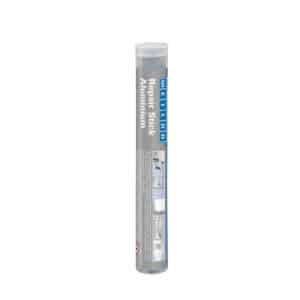
For small leaks and cracks that need immediate attention, epoxy repair products such as hand-kneadable repair sticks are a practical solution. Holes in pipes, tanks and castings can be sealed within minutes without tools.
Threadlocking and Shaft-Hub Joints
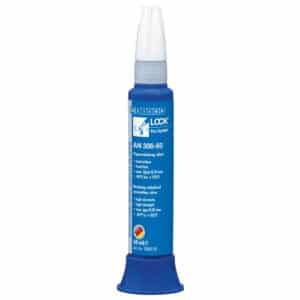
Vibration is the most common reason bolts work loose in industrial machinery. Anaerobic adhesives cure between metal surfaces in the absence of air, locking threaded joints and sealing them at the same time. Low and medium strength grades are used for joints that must be dismantled, and high-strength anaerobic adhesives for permanent joints. The same product family is also used to retain bearings, bushings and gear hubs on shafts and to seal flange faces without gaskets.
Production Line and Assembly Applications
In series production, bonding replaces rivets, screws and welding, speeds up assembly, joins dissimilar materials and spreads stress evenly across the joint. Structural acrylic adhesives stand out for metal-to-plastic and composite joints, while MS polymer and silicone-based sealants are used for panels, cabins and housings that need elastic bonding and sealing. When small parts must be fixed in seconds, cyanoacrylate adhesives are the answer.
Bond quality depends heavily on the surface. Oil, dust and release agent residues significantly reduce bond strength, so surfaces should be cleaned with surface preparation products and primed where necessary before application.
Plant Maintenance with Technical Sprays
Cleaning and Degreasing
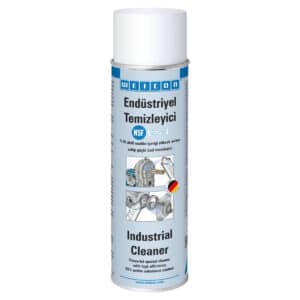
Removing oil, grease and dirt before maintenance is essential for safe work and accurate diagnosis. Cleaners and degreasers are available in different formulations for metal surfaces, electrical contacts and other applications. In food and beverage plants, NSF-registered cleaners should be selected.
Lubrication and Protection of Moving Parts
Chains, guides, hinges and pneumatic systems need regular lubrication. Multi-purpose oils and grease sprays reduce friction and wear while displacing moisture. Where incidental food contact is possible, NSF H1 registered lubricants must be used. For joints that become hard to release, assembly sprays and anti-seize products allow bolts to be opened easily even after exposure to high temperatures.
Corrosion Protection
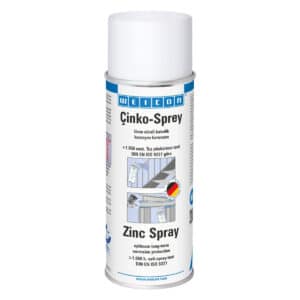
Outdoor equipment, steel structures and weld seams must be protected against corrosion. Among our corrosion inhibitors, zinc sprays are widely used to repair damaged galvanizing and to protect welds.
Quality Control and Non-Destructive Testing
Surface cracks in welded structures, castings and pressure equipment are not always visible to the eye. Crack detection sprays reveal surface-breaking cracks using the liquid penetrant method, which consists of cleaner, penetrant and developer steps. For leak testing, leak detection sprays show escaping gas by forming bubbles.
How to Choose the Right Product
- Material: The surfaces to be bonded or protected may be metal, plastic, rubber or composite, and each product group performs differently on each.
- Operating temperature: Heat-resistant formulations are required near engines, ovens and other hot zones.
- Chemical environment: Where oil, fuel, water or chemicals are present, check resistance in the technical data sheet.
- Need for disassembly: Use low-strength products for joints that will be opened during maintenance.
- Regulations and approvals: In food, drinking water or marine applications, look for NSF, DVGW or classification society approvals.
Featured Products for Industrial Maintenance
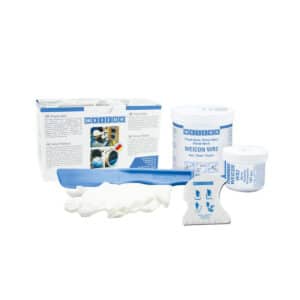
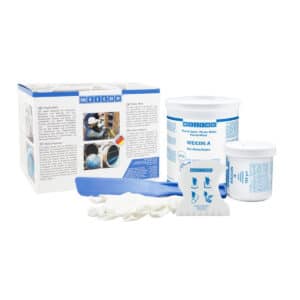
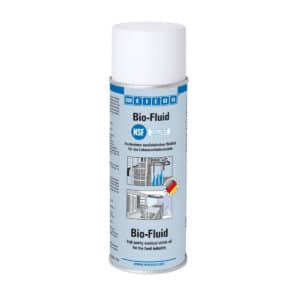
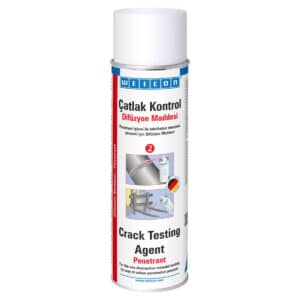
Browse every product group in our shop, or contact our technical team for help selecting the right product for your application.
Applications in Other Industries
To see how the same product groups are used elsewhere, visit our pages on adhesives and technical sprays in the automotive industry, in aviation and in rail systems.
Frequently Asked Questions
Can industrial adhesives replace welding and bolted joints?
In many applications, yes. Structural adhesives distribute stress evenly, join dissimilar materials and cause no thermal distortion. Product selection should still consider load, temperature and operating conditions, and the technical data sheet must be checked for critical joints.
Can a part repaired with metal-filled epoxy be machined again?
Yes. Once fully cured, metal-filled epoxy resin systems can be turned, milled, drilled and tapped. Curing time depends on the product and the ambient temperature.
How do you remove a bolt secured with anaerobic adhesive?
Low and medium strength grades can be removed with standard hand tools. With high-strength grades, the joint must be heated to about 250 °C and dismantled while hot.
Which technical sprays should be used in food production plants?
NSF H1 registered lubricants should be used where incidental food contact is possible, and NSF A1 or A7 registered products for cleaning. Approval information is listed on each product page.
How is a crack detection spray used?
The surface is first degreased with the cleaner, then the penetrant is applied and left to dwell. After excess penetrant is wiped off, the developer is sprayed and surface cracks appear as coloured lines.