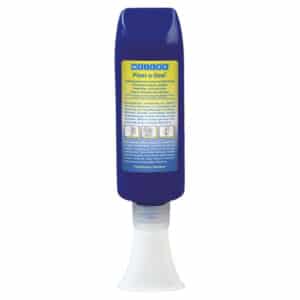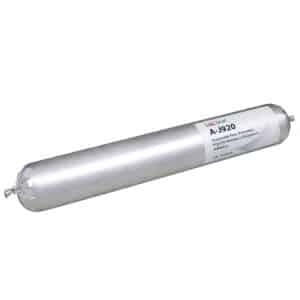
WEICON Gasket Maker Silicone Gasket


 Shipping Time 24 Hours : Weekdays 09:00-17:00
- 100% Original: All products with UTM Teknik guarantee


WEICON Gasket Maker Silicone Gasket is a permanently elastic silicone sealing material developed to create a seal on flange surfaces and connection points, curing with moisture. After assembly, it forms a “liquid gasket” film and is designed to maintain flexibility under influences such as vibration and thermal expansion. Especially in engines and power transmission components, it provides a practical sealing solution either together with a conventional gasket or as a gasket alternative. The manufacturer is WEICON; the product is part of WEICON’s Germany-based industrial chemical product portfolio.
What is WEICON Gasket Maker red silicone gasket used for?
The main function of this product is to fill gaps between two surfaces and create an elastic sealing bead that helps reduce the risk of leaks from oil, grease, and similar fluids. Because it cures with air moisture, it is designed to have low shrinkage after application, helping the seal line remain more stable. Good adhesion is targeted on many surfaces such as steel, aluminum, glass, and ceramic, which broadens its use across different equipment and housing designs. The emphasis on resistance to pressure, UV effects, and ageing supports expectations of visual and functional stability over long maintenance intervals.
Technical composition and compatible surfaces for the 310 ml red Gasket Maker
It is specified as a one-component (1K), polysiloxane-based material with acetate cure; this structure is suitable for sealing applications where flexibility needs to be retained. The material hardness is stated as approximately Shore A 35±5, which helps achieve a gasket that remains elastic without becoming overly rigid. Since the maximum joint/gap width is given as 25 mm and the maximum gap-filling capability as 5 mm, it should not be considered a standalone structural filler for very large openings. The fact that it is not paintable requires planning for applications with aesthetic requirements. Although it offers a sealing approach suitable for many material combinations, the goal is to “form a gasket surface,” so application geometry and surface preparation directly influence the result.
Performance under heat, chemical contact, and mechanical effects
Temperature resistance is specified as -60 °C up to +280 °C for short periods (about 2 hours) and up to +300 °C for short periods; this range supports selection for areas with thermal fluctuations such as around engines. The emphasis on oil and grease resistance and pressure resistance supports use logic in areas exposed to fluids, such as oil pans, transmission housings, and axle components. Since elongation at break is stated at around 500%, the gasket is intended to flex without cracking under movement caused by vibration and thermal expansion. A maximum movement accommodation of 15% highlights the importance of gap design and correct joint thickness in continuously operating systems. As the technical values are defined under laboratory conditions, in real applications surface roughness and tightening pattern become key factors affecting performance.
Application method and critical points during curing
For application, a 310 ml cartridge gun, pneumatic gun, or automatic dosing systems are recommended, supporting different scenarios in both production lines and field maintenance. Surfaces are required to be clean and degreased, as contaminants such as oil, dust, and dirt can reduce adhesion of the seal line. Since skin formation time for the red version is stated as about 12 minutes, assembling the parts before this time elapses is important for proper wetting and improved surface contact. Because the curing rate is given as about 2–3 mm within the first 24 hours, thicker applications require sufficient time to fully cure. The stated application conditions are +5 °C to +35 °C and 30%–95% relative humidity; outside this range curing behavior may change, making temperature and humidity control a practical quality criterion on site.
Industry applications and key advantages
In automotive and heavy-duty maintenance, it offers a fast service advantage through the “liquid gasket” approach on sealing surfaces such as engine covers, water pump connections, and around oil pans. In machine manufacturing and industrial maintenance, it forms an elastic sealing bead that can tolerate surface irregularities on gearbox/housing covers, pumps, flanged connections, and fluid-exposed equipment. In energy, marine, and process plants, its elastic structure aimed at maintaining sealing integrity on vibrating equipment can support stability between maintenance intervals. Key advantages highlighted on the durability side can be summarized as a wide temperature range, suitability for oil/grease contact, resistance to UV and ageing, and permanent elasticity. On standards and codes, ISSA/IMPA codes, DIN 4102 B2 building material class, and certain MIL-Spec equivalents are briefly noted in the documentation, which can help with procurement and specification matching.
Additional information
| Renk | Black, Red |
|---|