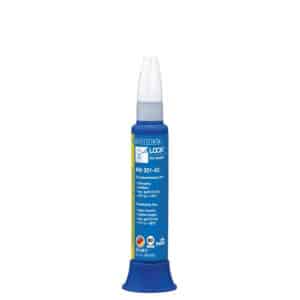
Weicon WEICONLOCK® AN 305-72 Anaerobic Pipe and Flange Sealant


It is an anaerobic industrial adhesive sealant that forms a formed-in-place gasket in pipe-thread and flange joints. Thanks to its PTFE-added, high-viscosity structure, it stays controlled along the joint line and helps reduce leaks caused by microscopic gaps. Its medium-strength formulation supports a balanced approach to removability during maintenance.
 Shipping Time 24 Hours : Weekdays 09:00-17:00
- 100% Original: All products with UTM Teknik guarantee


Weicon WEICONLOCK® AN 305-72 Anaerobic Pipe and Flange Sealant is an anaerobic sealing product that cures where air contact is cut off between metal surfaces. It focuses on reducing leak risk caused by microscopic gaps by forming a “formed-in-place gasket” in pipe threads and flange joints. Its PTFE-added, high-viscosity structure helps it stay more controlled along the joint line. Thanks to its medium-strength class, it provides sealing while still allowing disassembly to be planned with standard hand tools in maintenance scenarios. Formed-in-place sealing on pipe threads and flanges with WEICONLOCK 305-72 This product is designed especially for pipe-thread connections, filling gaps in the thread profile through circular application. For flange applications, it is used as an alternative to conventional cut gaskets by applying a continuous bead on one surface and assembling the parts quickly. Its white color can make it easier to visually check the application line and support forming a uniform bead. Manufacturer data states usability for threaded connections up to M80 / R 3″, providing a practical reference for various pipe sizes and equipment connections. Anaerobic chemistry, PTFE additive, and durability framework AN 305-72 is a high-viscosity sealant and is stated to bridge joint gaps up to a maximum of 0.4 mm. With a temperature resistance range given as -60 °C to +150 °C, it offers a predictable operating band for many industrial piping and flange joints. The handling/fixture time at room temperature is described as approximately 20–40 minutes, while full strength is reached in 5–10 hours, helping define the commissioning time window. The documentation also highlights approvals for drinking water and DVGW, and references guidelines/compatibility such as KTW-BWGL, which can be decisive for teams seeking suitability in sensitive applications. Application steps and process tips For best results, the assembly surfaces are expected to be degreased and cleaned; the cleaner the surface, the more consistent the sealing performance becomes. The product is applied evenly with the dosing nozzle, and it is recommended not to let the nozzle touch the metal surface, which helps reduce the risk of unwanted curing inside the bottle. On pipe threads, it is applied circularly onto the thread and the connection is tightened to the desired alignment. In flange applications, a continuous bead is applied to one flange surface, the parts are assembled without delay, and tightened to the appropriate torque. Industry applications and key advantages Anaerobic “pipe and flange sealing” products of this type are widely used wherever sealing is needed, such as on pump and motor housings, gearboxes, service covers, and process equipment flanges. Reducing leak risk in pipe-thread connections helps maintenance teams prevent downtime caused by leaks. High viscosity and the PTFE additive increase control along the application line, while the medium-strength approach focuses on sealing without making disassembly unnecessarily difficult. A minimum shelf life of 24 months at room temperature is stated, offering a practical advantage for consumables planning.
Additional information
| Miktar | 200 ml, 300 ml, 50 ml |
|---|
Related products