WEICON Flex 310 M 2K

This product is a two-component, hybrid polymer-based industrial adhesive used for bonding and sealing on metal and many plastic surfaces. It is preferred for large-area joining in machine manufacturing, HVAC, electrical applications, and boat/yacht assembly. It forms a flexible bond line, is paintable, and contains no solvents or silicone.
 Shipping Time 24 Hours : Weekdays 09:00-17:00
- 100% Original: All products with UTM Teknik guarantee


Weicon Flex 310 M 2K is a fast-curing, two-component, hybrid polymer (MS polymer)-based industrial adhesive and sealing compound. With a structure suitable for full-surface bonding of large parts, it focuses on forming a strong and flexible bond line in assembly processes. Being free of silicone, isocyanates, halogens, and solvents offers advantages in terms of material compatibility and process comfort across different production environments. The manufacturer is WEICON, and the product is of German origin.
Flex 310 M 2K approach to structural bonding and sealing
This industrial adhesive is positioned for applications that want to meet both bonding and sealing requirements within a single system. Its usability on many materials, including metals and numerous plastics, helps simplify process management in mixed-material assemblies. Its anti-corrosive character supports compatibility of the bond line on metal surfaces and provides confidence especially in service environments. Being paintable (wet-on-wet) and sandable simplifies post-assembly finishing plans in jobs where surface finishing is required.
Hybrid polymer base and core performance features
The system is based on a “2K hybrid polymer” and is described as a grey industrial adhesive; the curing type is chemical polymerization. A pot life of about 10 minutes requires that fixturing and surface preparation be completed before application. A gap-filling capability of up to 10 mm provides a more flexible application framework in assemblies where surface tolerances are not perfectly ideal. With a Shore A hardness value of 40±5, the bond line is designed to remain elastic rather than becoming rigid and brittle after curing. Since temperature resistance is stated as -40 °C to +90 °C, it can be considered for sealing and bonding in equipment operating within a moderate temperature range.
Application method and surface preparation
Before application, keeping surfaces clean, dry, and free of oil is considered critical for repeatable quality with this industrial adhesive. On heavily soiled metal surfaces, the correct cleaning step directly affects both adhesion and paintability/sandability performance. In high-requirement joints or on difficult substrates, primer use may be recommended; additionally, mechanical pre-treatment such as grinding or grit blasting can significantly increase bond strength. During application, applying a continuous bead and joining parts within the pot life helps maintain continuity of the bond line.
Process control with cartridge systems and field considerations
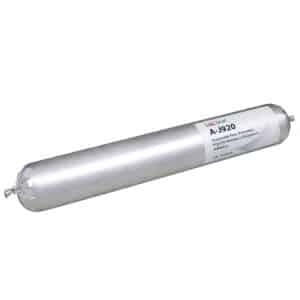
The product is applied via a special cartridge system with a static mixer, and discarding the first approximately 5–8 cm of material is a practical control step for mixing stability. The adhesive can be applied to one side; after joining, correctly fixing the position helps reduce gap changes caused by early movement. With an emphasis on resistance to weathering and UV radiation, its use range extends to both indoor and outdoor assemblies, but surface preparation and application thickness remain the key determinants of performance. For storage, an unopened pack is stated to have a shelf life of 12 months under normal climatic conditions; keeping it away from heat sources and direct sunlight supports stability.
Industry applications and key advantages
In metal fabrication, tank and equipment engineering, and machine/system manufacturing, it helps meet the need for an elastic bond line in joints exposed to vibration and environmental effects. In ventilation and air-conditioning systems, the electrical industry, and yacht/boat building, it stands out as an alternative industrial adhesive where silicone is not suitable. Its suitability for full-surface bonding can help reduce spot fasteners or contribute to structural support on large parts. The advantages of paintability and sandability help run post-assembly surface aesthetics and protection processes in a more planned way.
Additional information
| Miktar | 290 ml, 400 ml |
|---|