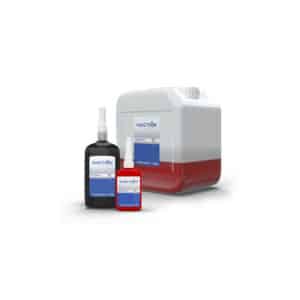
Adhetron UV 9172 Solvent-Free UV-Curing Acrylic-Based Adhesive

An acrylic-based industrial adhesive is used in optical components, lens assembly, and precision electronic applications. Thanks to its fast UV curing, low-shrinkage structure, and controlled application advantages, it stands out in processes requiring precise alignment.
 Shipping Time 24 Hours : Weekdays 09:00-17:00
- 100% Original: All products with UTM Teknik guarantee


Adhetron UV 9172 has been developed as a solvent-free, acrylate-based industrial adhesive that can be cured by UV or visible light. In official technical documents, the product is defined as a high-viscosity adhesive and glob-top compound, and it also stands out with its low shrinkage properties in parts requiring alignment precision. This structure addresses the need for controlled application, especially in optical component assembly and precision electronic applications. According to official corporate information, the Adhetron brand originates from Connecticut, USA, and the technical datasheet states that the brand operates under Pulsar Chem. Industry and Trade Co. INC.
UV 9172 Technical Structure and Performance
This industrial adhesive has an acrylate-based chemical structure and, according to official TDS data, is offered in a viscosity range of 40000–45000 cps. Together with its colorless form and specific gravity of 1.1, its high-consistency structure enables more balanced dispensing in applications where flow control is important. In terms of curing, the product is stated to be compatible with UV-A, visible light, and 365–405 nm LED systems; the technical datasheet indicates curing times of 18 seconds under UV-A and 5 seconds under LED. In its cured state, Shore D 80 hardness, an operating temperature range of -40°C to +170°C, a Tg of 76°C, and low linear-volumetric shrinkage values show that the product offers a balanced profile in terms of both dimensional stability and operational resistance.
UV 9172 Application Areas and System Compatibility
According to the official product description, this industrial adhesive is designed for lens bonding in active alignment processes and is also used in glob-top applications. For this reason, it can be used in optical module assembly, imaging systems, sensor-area protection, small electronic component fixing, and production processes requiring precision alignment. The product is described as being resistant to moisture, hot water, automotive fluids, detergents, gasoline, cleaning agents, and various aggressive chemicals, which makes it stand out in electronics, automotive electronics, and optical assembly lines. In terms of compatibility, the official text especially emphasizes lens bonding and systems requiring alignment precision, so its use is more meaningful in optical and technical assembly setups suitable for light curing.
Application Method and Process Advantage
The official TDS clearly states that the material can be used with pressure/time-controlled or positive displacement dispensing equipment. This high-viscosity industrial adhesive makes process control easier, especially in point applications where flow must be limited and in glob-top operations. In addition, since it is not an epoxy-based system and, according to the product description, does not require additional thermal curing in most active alignment applications, it may provide advantages on the production line in terms of both energy use and process steps. This structure helps maintain part position in precision optical assemblies, enabling more reliable and repeatable results.
Resistance, Storage, and Technical Notes
The inclusion of electrical data such as volume resistivity and dielectric constant in the cured state shows that the product can be considered not only for bonding but also for certain electronic protection scenarios. Since no independent certification or specific industry standard is additionally highlighted in the official documents, technical evaluation should be based directly on the manufacturer’s TDS data. For storage, it is stated that the product has a shelf life of 12 months in its original sealed packaging at 8°C to 23°C and must not be frozen. This information is important for inventory management and process continuity, especially for businesses engaged in regular production.
Additional information
| Miktar | 1 kg, 50 g, 500 g |
|---|
Related products