







UV Adhesives
Showing all 14 results
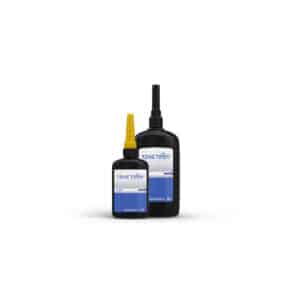
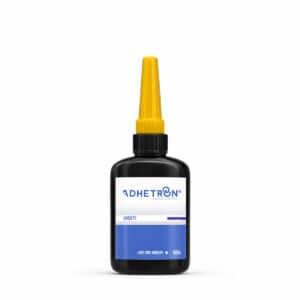
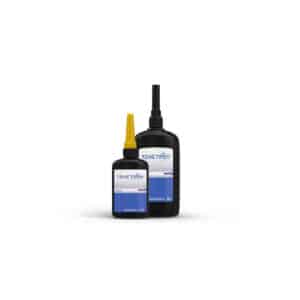
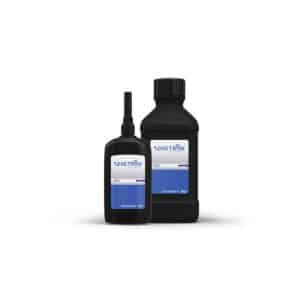
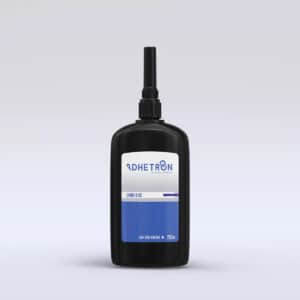

It is not enough for an adhesive to be strong alone. It must also be easy to apply in a controlled way, cure quickly, and provide a clean appearance after application. UV adhesives effectively meet these expectations because their curing process can be controlled with light. This feature not only saves time for the user but also improves production quality.
In this article, we will discuss in a detailed yet easy-to-understand way what UV adhesives are, what they are used for, where they are applied, what types they come in, how they should be selected, and what should be considered during application.
What Are UV Adhesives?
UV adhesives are special adhesive systems that cure under ultraviolet light, meaning they transform from a liquid form into a solid and durable structure. These products are generally offered as single-component systems and allow working time until light is applied. This makes part alignment, positioning, and controlled assembly processes much easier to carry out.
Basic Working Principle
These adhesives initiate a chemical reaction when exposed to UV light of a specific wavelength. As a result of this reaction, the product hardens very quickly and forms a strong bond. For this reason, UV adhesives provide a major advantage especially in precision applications where fast curing is required.
Structural Features
UV adhesives attract attention with features such as transparency, rapid curing, controlled application, and aesthetic appearance. Some formulations offer a hard and rigid structure, while others can form more flexible bonds. Products may also vary in terms of viscosity, optical clarity, chemical resistance, and surface compatibility.
What Are UV Adhesives Used For?
The value of an adhesive is measured not only by its bond strength but also by the speed, precision, and cleanliness it adds to the application process. UV adhesives offer important advantages in this respect across many industries.
Provide Fast Curing
One of the most important features of these products is that they can harden within seconds or in very short periods when UV light is applied. Especially on mass production lines, UV adhesives can shorten processing times and increase efficiency.
Offer Precise and Controlled Application
Since the product remains liquid until light is applied, parts can be aligned comfortably. This provides a major advantage in small parts, optical components, and decorative assembly operations. UV adhesives reduce the risk of error because they allow the user to control the curing time.
Create a Clean and Aesthetic Appearance
The appearance of the bond line is especially important in glass, plastic, and transparent material applications. UV adhesives can provide clean and professional results thanks to formulations capable of offering high optical clarity.
Where Are UV Adhesives Used?
UV adhesives are widely used in many industries where precision and aesthetics are important. Depending on the application area, the optical, mechanical, and chemical properties of the product may vary.
Glass and Decorative Applications
UV adhesives are frequently preferred in glass-to-glass or glass-to-metal bonding. In areas such as display systems, glass shelves, decorative objects, and furniture accessories, their ability to provide a transparent and clean bond line is a significant advantage.
Electronics and Medical Manufacturing
In small electronic components, sensor parts, display elements, and some medical devices, UV adhesives provide effective solutions thanks to their controlled curing properties. It is especially important in precision assembly processes to ensure fast and repeatable performance.
Automotive and Industrial Assembly
UV adhesives can be used in certain automotive interior trim parts, indicator components, lighting systems, and specialized industrial assembly lines. Their fast-curing and clean-application features contribute to production efficiency in these areas.
- Glass and decorative product assembly
- Electronic component bonding
- Medical device manufacturing
- Optical and transparent part applications
- Automotive interior part assembly
- Lighting and LED systems
- Precision industrial assembly operations
What Types of UV Adhesives Are There?
Not every product is suitable for every application. For this reason, UV adhesives are available in different types depending on their intended use and performance expectations.
UV Adhesives with Optical Clarity
These products are developed especially for applications where the bond line should not be visible. If optical clarity is a priority on glass, transparent plastic, and decorative surfaces, these types of UV adhesives are preferred.
Flexible UV Adhesives
In some applications, bonded parts may be exposed to slight movement, vibration, or thermal expansion. In such cases, UV adhesives with a more flexible structure may be more suitable.
High-Strength and Specially Formulated Products
There are also products developed for applications requiring chemical resistance, temperature resistance, or special surface compatibility. Some UV adhesives are formulated to provide higher performance on plastic, metal, or mixed-material systems.
| Adhesive Type | Key Feature | Common Application Area |
|---|---|---|
| Optically clear | Clean and invisible bond line | Glass and decorative applications |
| Flexible formulation | Tolerance to movement and expansion | Vibrating or delicate parts |
| High-strength | Strong and permanent bond | Industrial assembly |
| Special-purpose | Compatibility with specific surfaces | Electronics and medical applications |
How to Choose the Right UV Adhesive
Choosing the right product directly affects bond quality and production efficiency. The same UV adhesives may not be suitable for every application.
Determine the Surface Material
Whether the material to be bonded is glass, plastic, metal, or a mixed system is a decisive factor in the selection process. Some surfaces transmit light while others do not. For this reason, when selecting UV adhesives, both material compatibility and whether light can reach the adhesive should be considered.
Evaluate Curing Conditions
UV light must be able to reach the application point at a sufficient level. In areas where light cannot reach, curing may remain incomplete. Therefore, part geometry, the power of the light source, and the application equipment are important in product selection.
Consider Mechanical and Aesthetic Expectations
In some applications, high bond strength is the main priority, while in others optical clarity or flexibility may be more important. For this reason, when choosing among UV adhesives, it is necessary to evaluate not only speed but also overall performance according to the intended use.
What Should Be Considered During Application?
Even the highest-quality product will not deliver the expected result if applied incorrectly. For this reason, some basic application rules should be followed when using UV adhesives.
Surface Cleaning
The surface must be clean, dry, and free from dirt. Dust, oil, and other residues can reduce adhesion. Surface preparation is always the first step for a strong and clean bond.
Apply the Correct Amount
Using too much product may cause overflow, aesthetic defects, or incomplete curing. Too little product, on the other hand, may reduce the bond area. UV adhesives usually provide the best result when applied in a controlled and balanced amount.
Cure with Suitable Light
Curing performance depends on the UV source used, exposure time, and the product formulation. Therefore, equipment and curing time should be selected in accordance with the manufacturer’s recommendations. Insufficient light may prevent the bond from reaching its full performance.
- Clean and dry the surface.
- Apply the adhesive in a controlled manner.
- Align the parts correctly in position.
- Cure using a suitable UV light source.
- If necessary, perform a final inspection for full performance.
Important note: UV adhesives cure effectively only in areas where sufficient light can reach. For this reason, part design and light access are critical to application success.
Conclusion
UV adhesives have an important place in modern manufacturing and assembly processes thanks to their fast curing, precise application, and aesthetic bonding advantages. The controlled performance they provide, especially in glass, electronics, medical, and decorative applications, makes these products highly valuable.
When the right product is selected and applied properly, UV adhesives do more than simply provide a strong bond; they also increase production speed, improve appearance, and raise application quality. In short, for those looking for a precise and fast bonding solution, UV adhesives are an effective and professional option.



