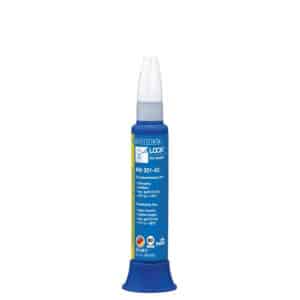
WEICON WEICONLOCK® AN 305-74 Anaerobic Flange Sealant 50 ml (Orange)


It is an anaerobically curing industrial adhesive flange sealant for sealing metal flanges and close-tolerance surfaces. It is used as a gasket alternative in pumps, gearboxes, engine housings, and process equipment. Its high viscosity helps reduce bead run-out and supports joint stability.
 Shipping Time 24 Hours : Weekdays 09:00-17:00
- 100% Original: All products with UTM Teknik guarantee


WEICONLOCK® AN 305-74 Anaerobic Flange Sealant 50 ml (Orange) is an anaerobically curing flange sealant designed to seal metal flange faces. Thanks to its high-viscosity consistency, it helps form a continuous sealing bead on the flange surface without running or spreading. Since curing takes place in the oxygen-deprived zone between metal surfaces, it is intended to provide both sealing and a locking effect in the joint after assembly. The product is manufactured by WEICON GmbH & Co. KG, Germany.
Professional Surface Sealing on Flanges with WEICONLOCK AN 305-74
This product is positioned as an alternative to conventional gasket materials on close-tolerance metal surfaces such as flanges, gearboxes, and engine housings. With its high strength and “difficult to disassemble” character, it supports joint stability on vibration-exposed equipment and therefore offers an industrial adhesive-style approach. The orange color and fluorescent property make it easier to visually inspect the application line, adding practicality for maintenance teams. Because flange sealing is recommended by applying a continuous bead to one side and joining the parts quickly, it can improve efficiency in processes that follow proper assembly discipline.
Anaerobic Chemical Base and Key Performance Values
AN 305-74 cures between metal surfaces as a methacrylate-based anaerobic industrial adhesive/sealant compound. The stated viscosity range of 30,000–100,000 mPa·s supports controlled application on flange surfaces and helps the material stay in place. With a maximum gap-bridging capacity defined as 0.5 mm, it is intended to deliver a reliable sealing film when surface flatness and assembly tolerances are suitable. The specified temperature resistance range of -60 °C to +180 °C helps planning for use around equipment exposed to temperature fluctuations.
Curing Behavior, Disassembly Character, and Strength Approach
Since handling strength is specified as 15–30 minutes, the initial stabilization phase after assembly should be considered together with this time window. The stated 12 hours for final strength is an important reference for commissioning plans, especially in pressurized systems. Breakaway torque values of 16–24 Nm and prevailing torque values of 5–10 Nm indicate a medium-to-high locking effect, meaning the “difficult to disassemble” character should be considered in maintenance scenarios requiring removal. As shear strength (DIN 54452) is stated as 5–10 N/mm², the mechanical integrity of the film layer formed on the flange surface is supported. Within this framework, the product stands out as a solution that combines sealing needs with industrial adhesive performance.
Application Method, Compatible Use Areas, and Logistics Notes
For best results, it is recommended to degrease and clean the mating surfaces; the cleaner the surface, the more stable the continuity of the sealing line. Application is carried out evenly directly from the package, and it is recommended not to let the dispensing tip contact the metal; since metal particles can cause premature curing inside the packaging, product that has contacted metal should not be poured back into the container. Beyond flanges, a sealing approach is also described for pipe connections by applying the material evenly around the thread, offering versatility in the field. Typical use scenarios include process lines, pump/valve connections, compressor and gearbox-area assemblies, HVAC equipment, and industrial maintenance/repair work; in these areas, the industrial adhesive form can help increase joint reliability. Stating a minimum shelf life of 24 months and being identified in supply systems via ISSA/IMPA codes can provide advantages in stock management and maintenance logistics.
Related products