Weicon WEICONLOCK AN 302-50 Anaerobic Threadlocking Sealant


It is an anaerobic industrial adhesive that locks metal threaded connections and provides sealing at the same time. In machinery, automotive, and plant maintenance, it reduces loosening in bolt-nut joints and improves assembly safety.
 Shipping Time 24 Hours : Weekdays 09:00-17:00
- 100% Original: All products with UTM Teknik guarantee


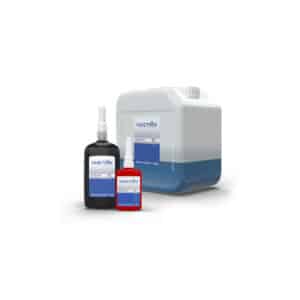
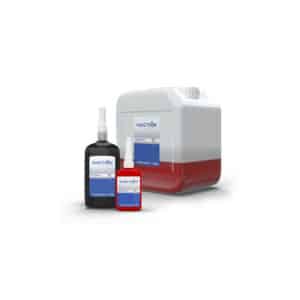
WEICON WEICONLOCK AN 302-50 is a single-component anaerobic product designed to secure metal threaded connections against loosening while simultaneously providing sealing. Its 200 ml transparent packaging offers a practical capacity for applications aiming for longer uninterrupted use in routine maintenance work and high-volume assembly lines. The product cures in metal surface gaps where contact with air is limited, creating a high-strength lock between the fastener and the thread profile. Thanks to its transparent nature, it can also be preferred in assemblies where keeping visual traces after application to a minimum is desired. It is manufactured by WEICON GmbH & Co. KG (Münster, Germany).
Technical composition and operating principle of WEICONLOCK AN 302-50
AN 302-50 belongs to the industrial adhesive category, operating with an anaerobic acrylate/triacrylate resin system and peroxide-type initiator components. The product reacts as oxygen decreases between metal surfaces, filling the thread gaps and creating a locking effect that reduces self-loosening under vibration. Its medium-viscosity character provides a balance between flow and control; a viscosity of about 500 mPa·s at +25 °C is positioned for this purpose. In threaded connections, it contributes to sealing in assemblies with limited tolerances by filling gaps up to a maximum of 0.15 mm. In a properly designed joint, the use of an industrial adhesive can help reduce micro-movement and lower maintenance needs caused by fretting and loosening.
Performance characteristics and strength values
WEICONLOCK AN 302-50 is positioned in the “high strength” class and is generally considered difficult to remove when disassembly is required. For threaded connections, the breakaway torque is given as approximately 30–35 Nm, and the prevailing torque as 55–70 Nm; these values represent threadlocking performance under standardized test conditions. According to DIN 54452, the shear strength is in the range of 25–35 N/mm², indicating the level of mechanical interlocking between the bonded surfaces. The service temperature resistance is specified from -60 °C to +175 °C, enabling performance continuity under thermal effects in many machine maintenance scenarios. Reaching handling strength in about 2–5 minutes at room temperature is an important process benefit for those looking to shorten assembly cycle times. Full strength typically develops within 2–4 hours and should be considered in commissioning planning.
Application method and process tips
The product is ready to use and is applied evenly around the thread without bringing the bottle/nozzle into direct contact with the metal. For threads where sealing is required, it is recommended to form a continuous film with a circular motion around the thread and then assemble and tighten the parts. In blind-hole applications, filling the hole with a sufficient amount of product reduces trapped air and incomplete wetting, providing a more stable lock. For press-fit parts or larger cylindrical surfaces, applying a thin and uniform layer to both surfaces is preferred for more consistent results. Any leftover product that has contacted metal should not be poured back into the container; even very small metal particles can trigger unwanted curing inside the package.
Surface preparation and compatible surfaces
Although WEICONLOCK AN 302-50 can tolerate lightly oily surfaces, the best results are obtained on cleaned and degreased metal parts. Therefore, removing oil, cutting fluids, and dirt residues before assembly improves both locking strength and sealing continuity. The primary compatible application area is metal threaded connections (bolts, nuts, studs, and similar); the product penetrates microscopic voids in the thread profile to create locking. The intended application range is specified for threaded connections up to M20 (including R ¾”); for larger diameters, product selection should be additionally evaluated according to the joint geometry. This approach ensures that locking with an industrial adhesive remains within the design limits.
Sector-based application areas and key advantages
This product offers a common solution approach in machine manufacturing and maintenance/repair operations, in connections on vibration-prone equipment, and in assemblies with a periodic risk of loosening. In automotive and commercial vehicle maintenance, additional protection against loosening can be targeted in areas such as auxiliary components around the engine, transmission fasteners, and bolted joints on the chassis. In pumps, compressors, gearboxes, and process equipment, managing micro-leaks and loosening issues caused by threaded joints with a single product can simplify inventory and reduce labor complexity. In energy and industrial plant maintenance, the wide service temperature range and fast handling strength can help optimize planned downtime. The transparent formulation reduces visible residue in applications where assembly aesthetics matter, while the high-strength class suits designs that prioritize joint security.
Additional information
| Miktar | 20 ml, 200 ml, 50 ml |
|---|