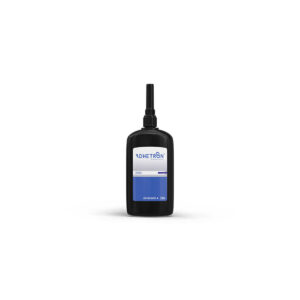
Weicon Contact VM 2000 Cyanoacrylate Adhesive


It is a single-component industrial adhesive used for fast bonding in metal-focused assemblies. Its high-viscosity structure reduces run-off, enabling controlled application and helping achieve quick initial bonding. It is practical for small-part bonding, maintenance and repair, and serial assembly applications.
 Shipping Time 24 Hours : Weekdays 09:00-17:00
- 100% Original: All products with UTM Teknik guarantee


Weicon Contact VM 2000 Cyanoacrylate Adhesive is a single-component industrial adhesive developed especially for fast and controlled bonding of metal parts. Thanks to its high-viscosity structure, it has low run-off tendency, stays more stable at the applied area, and offers a slower-curing character that allows repositioning during assembly. Its base chemistry is a methyl-based cyanoacrylate resin, and curing is triggered by moisture, supporting rapid bond formation. The product is developed by WEICON GmbH & Co. KG, based in Germany.
Positioning of Contact VM 2000 as an industrial adhesive
This product is positioned as a cyanoacrylate industrial adhesive in the “instant bonding” class for metal surfaces. In addition to metal joints, it can also be used on absorbent and porous materials, helping cover different assembly needs with a single product. Its transparent and colorless appearance is an advantage in applications where visual integrity of the bond line is desired. The silicone-free formulation offers practical compatibility when working with different material combinations in production and maintenance processes.
Technical performance and resistance characteristics
VM 2000 is designed for controlled application in bonding small parts thanks to its high viscosity range, and it aims to create a more reliable bond line on tolerance-prone surfaces with a gap-bridging capability of up to 0.2 mm. Initial fixture time varies by substrate and is described as ranging from seconds to tens of seconds, helping balance speed and positioning in serial assembly. After curing, shear strength values on metal and certain plastics are given in different ranges depending on the application, so trial bonds suitable for the part geometry are recommended. Temperature resistance is specified as -50 °C to +80 °C, and up to +100 °C for short periods, supporting stability in limited temperature exposures typical for industrial adhesive use. Electrical properties such as high volume resistivity and an approximate dielectric strength of 25 kV/mm can provide an additional advantage in assemblies where insulation performance is relevant.
Application method and surface preparation
Since surface preparation is critical for cyanoacrylate industrial adhesives, the bonding surfaces must be clean, dry, and free of oil. The product is applied as a thin layer to one surface, and avoiding excessive film thickness is important for healthy full curing. After application, the parts are joined quickly and, if possible, held in place; because curing starts with ambient moisture, the reaction may slow down under low-humidity conditions. For large bonding areas, a spot-application approach can help reduce internal stresses and support a more balanced bond line.
Sector-specific applications and compatible substrates
Contact VM 2000 is suitable as an industrial adhesive in metalworking, machinery manufacturing, housing and fixture fabrication, and similar assembly processes. In metal-to-metal bonding, it aims to enable rapid fixation of small parts, reduce fixture time, and standardize assembly. Being applicable on absorbent or porous materials also enables broader use with one product in maintenance/repair and prototyping work. When the process is set up in line with application temperature and environmental conditions, advantages such as fast fixture, controlled application, and a transparent bond line come to the fore. In addition, being defined with classification codes such as ISSA and IMPA supports traceability in procurement and technical documentation processes.
Additional information
| Miktar | 30 g, 60 g |
|---|
Related products