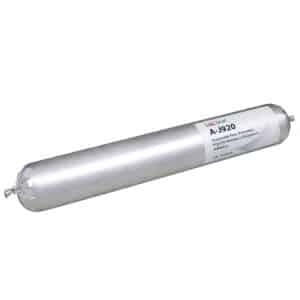
Adhetron CaTron 2003 Medical-Approved Cyanoacrylate Adhesive


It is a medical-approved, single-component cyanoacrylate industrial adhesive. It provides fast fixturing on plastic, metal, and rubber parts and is suitable for assembling single-use medical products.
 Shipping Time 24 Hours : Weekdays 09:00-17:00
- 100% Original: All products with UTM Teknik guarantee


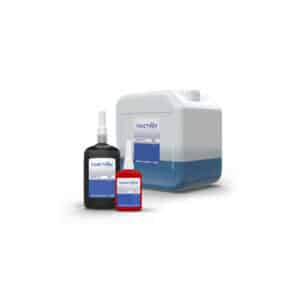
Adhetron CaTron 2003 Medical-Approved Cyanoacrylate Adhesive 50g is a single-component cyanoacrylate industrial adhesive that provides fast fixturing. It targets general-purpose bonding performance on plastic, metal, and rubber parts and is positioned particularly for mass-production applications such as assembling single-use medical products. Thanks to its colorless liquid form, it is suitable for controlled application on small surfaces and is designed to achieve initial grab within seconds. On the medical compliance side, its ISO 10993-5 certification is an important reference for manufacturing processes where certain biocompatibility evaluations are expected.
CaTron 2003 Industrial Adhesive: Product description and chemical structure
This product is defined as an instant-bonding industrial adhesive with an ethyl-based cyanoacrylate structure. With a general-purpose approach suitable for multiple bonding applications, it is developed for use across different material groups such as plastics, metals, and rubbers. Its classification as suitable for single-use medical assembly applications indicates a focus on process repeatability and fast cycle-time requirements. ISO 10993-5 certification stands out as a key advantage, especially in terms of documentation and quality requirements in medical manufacturing supply chains.
Technical parameters, origin, and storage conditions
Technical documents state that the product is a colorless liquid and has a low-viscosity cyanoacrylate character. As manufacturer information, the Adhetron brand is positioned with a US-based manufacturing infrastructure, and distribution in Turkey is indicated through Pulsar Kimya. For storage, the recommended storage temperature is given as 15°C, and the maximum storage temperature as 25°C; shelf life is 12 months in unopened packaging. Compliance with these conditions is considered critical to maintain batch consistency, especially in medical and mass-production applications.
Cure speed, application dynamics, and process control
The manufacturer provides the time to reach initial strength at the 0.1 N/mm² level under 22°C and 50% relative humidity in a seconds range depending on the substrate. Ranges such as 10–50 seconds on steel, 4–10 seconds on EPDM, and 5–7 seconds on ABS illustrate this fast-fixturing behavior. Therefore, application is carried out by applying a small amount of adhesive to the parts, quickly aligning and joining the surfaces, and holding them fixed for the required fixture time. Since ambient conditions and material type can affect curing behavior, it is expected that the appropriate application window will be verified through process trials in critical assemblies.
Strength profile and temperature effects
For this industrial adhesive, temperature resistance is given as -55°C to +95°C; this forms the basis for suitability assessments in low-temperature storage and moderate-temperature operating scenarios. In the table shared for temperature effects on strength, it is stated that initial strength is maintained in the 75–100°C band, while a decrease may be observed at 125°C. Adhesion performance is provided as lap-shear ranges on different substrates; for example, 13.8–20 N/mm² on grit-blasted steel, 12.6–16 N/mm² on aluminum, and 14–23.5 N/mm² on PVC. In addition, the flash point is listed as >85°C; this can be considered a supporting parameter in process safety and storage evaluations.
Compatible substrates and industry use cases
Since the product is defined as an industrial adhesive compatible with plastics, metals, and rubber parts, it can be evaluated on assembly lines involving different material combinations. In the medical sector, assembly of single-use consumables is a prominent use case in production environments requiring fast cycle times and traceability. In electronics and electrotechnics, it can be preferred in auxiliary assembly steps such as bonding plastic housing parts, small metal components, and elastomer elements. It also offers a practical solution for the rapid fixing of small parts combining plastic–metal–rubber in automotive supply, consumer products, and general industrial assembly applications. ISO 10993-5 certification, fast fixture time, broad substrate compatibility, and defined storage/shelf-life information are among the main advantages that make this industrial adhesive stand out for production environments with high process discipline.
Additional information
| Miktar | 50 g, 500 g |
|---|