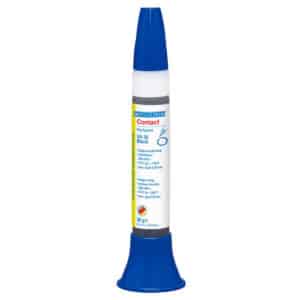
WEICON WEICONLOCK AN 301-65 Anaerobic Flange Sealant 50 ml (White)


 Shipping Time 24 Hours : Weekdays 09:00-17:00
- 100% Original: All products with UTM Teknik guarantee


Weicon WEICONLOCK AN 301-65 Anaerobic Flange Sealant 50 ml (White) is an anaerobic sealing compound designed to create a seal on pipe threads and flange surfaces. Its PTFE-filled formulation is intended to flow into the joint gaps and form a film layer that helps reduce leak risk. Thanks to its high viscosity, it makes run-off more manageable on vertical surfaces and helps maintain control of the application bead. The manufacturer is WEICON, and the product is part of WEICON’s Germany-origin portfolio.
Intended pipe and flange sealing with AN 301-65
The main purpose of this product is to provide sealing by filling micro-gaps in metal threaded connections and flange joints. Due to its anaerobic operating principle, it cures between metal surfaces in areas with limited contact to air, creating a permanent seal inside the connection. Since it is positioned in the medium-strength class, disassembly after installation can generally be planned to be possible with standard hand tools. The PTFE additive is designed to help form a more uniform sealing line and to prevent a “dry” leak path from remaining in the threads.
Technical structure and performance framework
The white product is described as a sealing compound in a high-viscosity range, and this character supports controlled application. The stated maximum gap-bridging capacity of 0.5 mm indicates that more reliable results are achieved especially with well-fitting thread and flange geometries. Reaching handling strength in about 10–20 minutes at room temperature helps plan the assembly rhythm, and a 24-hour curing window should be considered for full performance. The stated temperature resistance range of -60 °C to +150 °C provides a practical reference when selecting for sealing needs under variable service conditions.
Application method and process control points
Application is carried out directly from the package nozzle in an even manner, aiming to form a continuous bead around the thread with a circular motion. While tightening the pipe joint, the tightening process is continued until the final orientation is achieved, and it is important not to break the sealing line. For flange sealing, the recommended approach is to apply a continuous bead to one surface and quickly assemble and tighten the parts. Avoiding contact between the nozzle tip and metal, and not returning metal-contaminated material back into the container, is a critical field discipline to prevent premature curing inside the package.
Surface preparation, disassembly, and suitability notes
Although it is stated that lightly oily surfaces can generally be tolerated, cleaning and degreasing the surfaces and, if necessary, light roughening are recommended for best results. If speed is required or surface conditions are challenging, the process can be supported with an activator to promote curing. With its PTFE-based “pipe and flange sealing” positioning and the stated approach for potable-water applications along with related approval/certification information, it can provide an advantage in specification matching. For storage, a shelf life of at least 24 months at room temperature in the unopened original packaging is stated, making maintenance stock management more predictable.
Industry applications and key advantages
It can be used for leak control in threaded pipe connections and flanged joints in mechanical installations and industrial line assembly. In machine manufacturing and maintenance/repair processes, it offers a practical sealing solution for pump and valve connections, housing feed-throughs, and connections that may be dismantled and reassembled during service. High viscosity allows the application bead to remain more controllable, and consumption management can be planned more consistently than with tapes or low-viscosity alternatives. Being positioned as medium-strength with a focus on removability can help ease equipment access during maintenance intervals.