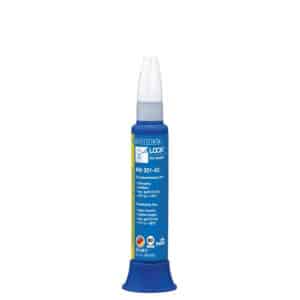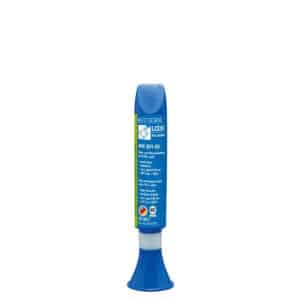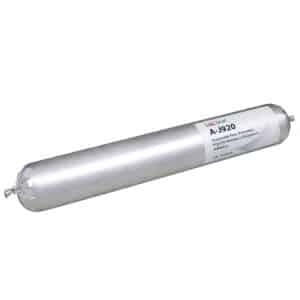
WEICON WEICONLOCK AN 306-41 Retaining Compound


It is a single-component anaerobic industrial retaining compound. It provides secure fixation by reducing loosening in cylindrical part assemblies such as bearing housings, shafts, and bushings. Thanks to its medium-strength formulation, it can be removed with standard hand tools when needed.
 Shipping Time 24 Hours : Weekdays 09:00-17:00
- 100% Original: All products with UTM Teknik guarantee


WEICON WEICONLOCK® AN 306-41 is a single-component anaerobic industrial adhesive designed to retain and secure cylindrical parts such as bearings, shafts, and bushings. It cures in air-excluded areas between metal surfaces, forming a medium-strength joint aimed at reducing loosening during assembly, and it is designed to be removable with standard hand tools. Its yellow color makes it easier to observe product distribution during application and allows controlled intervention during service. The product is manufactured by WEICON GmbH & Co. KG (Germany) and belongs to the WEICONLOCK anaerobic systems range.
Where is the AN 306-41 industrial adhesive used?
This industrial adhesive is used to secure cylindrical fits where tolerances have increased due to wear or where there is a risk of loosening. In connections such as bearing housings, bearing seats on shafts, and bushing-sleeve assemblies, it aims for a more stable seating by compensating for the gap within a limited range. It can also be considered for threaded connections up to M20 and may help reduce loosening during assembly. The medium-strength approach offers a practical balance for maintenance teams seeking a solution that is “secure but removable.”
Anaerobic system chemistry and key performance features
AN 306-41 is an anaerobic system that hardens at metal interfaces where oxygen is excluded; therefore, the correct assembly clearance and the metal contact surface directly affect performance. The maximum gap-filling capability is specified as 0.12 mm, and not exceeding this limit is important for achieving the intended curing and strength. Shear strength is given as 8–12 N/mm², indicating a bonding profile that supports load transfer in cylindrical assemblies. Temperature resistance is stated as -60 °C to +150 °C, which suits typical operating conditions for many machine elements. For threaded connections, breakaway torque is 12–15 Nm and prevailing torque is 17–22 Nm, providing a controlled balance between joint security and serviceability.
Curing window and process planning
Reaching handling strength within 10–20 minutes at room temperature helps keep parts in position shortly after assembly. Full strength developing within 3–6 hours makes the process more predictable during planned maintenance shutdowns. It should be noted that curing speed in anaerobic systems is influenced by factors such as metal type, assembly clearance, and ambient temperature. In serial applications, establishing a standard surface-prep and dosing routine improves efficiency and repeatability.
Application method, surface preparation, and safety notes
For best results, surfaces should be cleaned and degreased where possible; if needed, light roughening can support adhesion, although the system is stated to tolerate slightly oily surfaces to a certain extent. The product should be applied as a thin, even film using the dosing tip, and it is important not to let the dosing tip touch metal or to pour back product that has contacted metal into the container, since even small metal particles can cause premature curing inside the package. For press fits or larger cylindrical assemblies, wetting both surfaces with a thin layer improves bond uniformity; for blind holes, the hole should be filled with a sufficient amount of product. For storage, a shelf life of at least 24 months at room temperature is stated in the unopened original container, and keeping it away from heat sources and direct sunlight is recommended. As basic safety practice, use chemical-resistant gloves and eye protection, ensure ventilation, and avoid skin/eye contact.
Additional information
| Miktar | 20 ml, 200 ml, 50 ml |
|---|