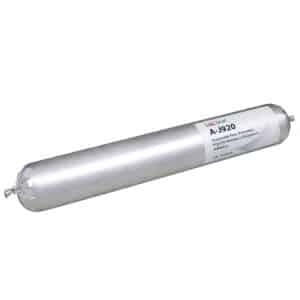
WEICON RK-1300 Structural Acrylic Adhesive 60 g


This product is a structural acrylic-based industrial adhesive designed for high-strength bonding of materials such as metal and rigid plastics. It is used for large-area joints in machine manufacturing, metalworking, and automotive assembly. With its No-Mix application approach, it enables a practical process and forms a durable bond line.
 Shipping Time 24 Hours : Weekdays 09:00-17:00
- 100% Original: All products with UTM Teknik guarantee


WEICON RK-1300 Structural Acrylic Adhesive 60 g is an industrial adhesive system with a paste-like consistency, designed for applications where high-strength bonding is required over large surface areas. Thanks to its No-Mix principle, it offers a practical process flow without a mixing step. It is positioned as a solution focused on structural strength for bonding different materials such as metal, ferrite, and rigid plastics. The manufacturer is WEICON, and the product is part of WEICON’s Germany-origin portfolio.
What is the RK-1300 structural acrylic industrial adhesive used for?
This industrial adhesive is preferred for joints requiring impact, peel, and shear strength, especially in large-area bonding. It offers an alternative or supplementary joining approach to conventional methods such as screws or welding in fields like mechanical and fixture engineering, metalworking, vehicle manufacturing, tool-and-die production, and the construction and furniture industries. The bond line formed after application helps keep process time manageable while targeting a rigid joint. When the joint geometry is selected correctly, it supports repeatable results across different material combinations.
How the No-Mix system works and its chemical basis
The system operates in a “No-Mix” procedure using a methyl methacrylate (MMA)-based adhesive and a separate activator; this approach aims to reduce operator-related mixing errors. The material has a pasty consistency, which supports controlled spread and ease of application on the surface. A processing temperature range of +10 °C to +40 °C is specified, with a minimum of +18 °C required for curing; therefore, the effect of workshop temperature on the process should be considered. The information that final ultimate strength is reached after 24 hours helps guide planning for loading after assembly.
Surface preparation, gap management, and strength expectations
For reliable bonding, surfaces must be clean, dry, and free of oil; if needed, mechanical pre-treatment such as roughening can be used to target higher strength. In standard practice, the activator is applied to one or both sides depending on the bond gap; one-side application is sufficient for small gaps, while two-side application is recommended for larger gaps and passive surfaces. Since the documentation states a base value of up to 0.4 mm for gap bridging and up to 0.8 mm under suitable conditions, it should not be treated as a filler product for very large openings. On material compatibility, some plastics (especially polyamide, PTFE, and polyolefins) are noted as difficult to bond without special surface treatment, making process design important for such substrates. In terms of strength, tensile shear strength values of approximately 25 N/mm² on grit-blasted steel and 20 N/mm² on aluminum are stated; these values should be supported by proper surface preparation and an appropriate bond-line thickness.
RK-1300 application steps and sector-specific use scenarios
The procedure describes applying the activator to the surface by brush, spray, or dipping, then allowing the ventilation time to complete, and applying the adhesive typically to the side without activator. After joining the parts, it is stated that the bond progresses to handling and load-bearing levels in a short time, while curing time must be observed to reach final strength; this directly affects in-line flow and fixture planning. In automotive and vehicle equipment, it is used for bonding metal sheet parts, brackets, and composite components; in machine manufacturing for housings, covers, and structural elements; and in tool-and-die and metalworking for assemblies requiring rigid and repeatable bonds. It is also positioned in construction and furniture applications for metal-plastic combinations or rigid plastics bonded over wide areas. The advantages of this industrial adhesive system can be summarized as a mix-free process, controlled application due to paste consistency, and a focus on creating structural bonds across multiple material combinations. In addition, the temperature resistance information of -50 °C to +130 °C and short-term +180 °C provides a practical parameter for selecting operating environments.
Standards and procurement code information
The document lists ISSA 75.629.52 and IMPA 812991 codes, which can provide practical convenience for industrial procurement and specification matching. For application and occupational safety, it is emphasized that the relevant safety documentation should be taken into account; when setting up the process, ventilation, personal protective equipment, and work-area discipline should be included in standard operating procedures.