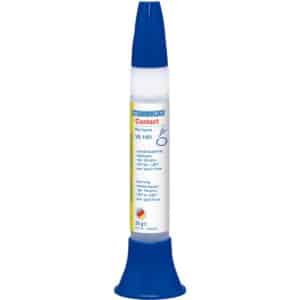
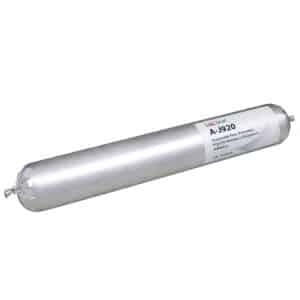
WEICON Contact VA 1500 Cyanoacrylate Adhesive


It is a high-viscosity, single-component cyanoacrylate industrial adhesive. In addition to fast assembly on rubber and plastics, it is also used on absorbent surfaces such as wood, leather, and ceramics. Clear curing and controlled application provide clean, practical bonds.
 Shipping Time 24 Hours : Weekdays 09:00-17:00
- 100% Original: All products with UTM Teknik guarantee


WEICON Contact VA 1500 Cyanoacrylate Adhesive is a high-viscosity industrial adhesive that offers a manageable working time for rubber and plastic applications. Its colorless, clear cure makes it suitable for assemblies where a cleaner finish is desired along visible bond lines. Because it can also be used on absorbent and porous materials, it provides a broad range of use in maintenance/repair and production environments. Its single-component structure enables a practical process flow when fast assembly is required.
Material compatibility and main purpose of the VA 1500 industrial adhesive
This industrial adhesive is based on ethyl cyanoacrylate chemistry and forms a colorless/transparent bond line in liquid form. Its high-viscosity character helps reduce run-off on vertical surfaces and improves application control. In addition to rubber and plastics, it can be considered for bonding absorbent/porous substrates such as wood, cork, leather, and ceramics. Since it can also be used on metal surfaces, it can simplify processes in assemblies where different substrates are joined. The product is developed and supplied by WEICON GmbH & Co. KG (Germany).
Technical properties, resistance, and working conditions
The recommended processing temperature for VA 1500 is +15 °C to +40 °C, and keeping relative humidity in the 40%–70% range is important for consistent curing. A viscosity range of 1,000–1,500 mPa·s provides a consistency that supports controlled dispensing and a relatively slower initial set behavior. Because the maximum gap-filling capability is specified as 0.2 mm, best results are typically targeted on tight-fitting parts and thin bond lines. Full strength typically develops within 24 hours, which should be considered in quality control and commissioning planning. Temperature resistance is -50 °C to +80 °C, with short-term resistance up to +100 °C, offering a sufficient working window for many general industrial assembly scenarios.
Application method and surface preparation
For reliable results with this industrial adhesive, keeping surfaces clean, dry, and free of oil is considered critical. The adhesive should be applied to only one of the surfaces, and the layer thickness should be kept at approximately 0.05–0.2 mm; thicker layers can make full curing more difficult. For large bonding areas, a spot-application approach is preferred to help reduce internal stresses. After application, parts should be joined quickly and, if possible, fixed in place, because curing begins with ambient moisture. This discipline supports both assembly speed and bond-line uniformity.
Using primers and activators on difficult plastics
For difficult-to-bond plastics such as PE, PP, POM, and PTFE, as well as for TPE and silicone, pre-treating the surface with a suitable CA primer can significantly improve adhesion. In conditions that slow curing—such as wider bond gaps, absorbent substrates, or low humidity—using a CA activator can help increase process reliability. This activation approach provides practical support, especially for production lines aiming for more repeatable results with high-viscosity cyanoacrylate types. Using a suitable surface cleaner for preparation can also improve bond quality by reducing adhesion losses caused by dust and dirt.
Sector-based applications and key advantages
Industrial adhesives in the VA 1500 class are used for fast joining needs in maintenance workshops, machine manufacturing, plastic part assembly, and general production lines. They offer the advantage of controlled application on rubber parts, seals, and elastomer components, while transparent curing can help achieve a cleaner appearance in plastic part joints. The ability to work on absorbent materials such as wood, cork, leather, and ceramics expands use cases in furniture/accessory assembly and internal equipment components. High viscosity and a relatively slower initial set behavior provide valuable practicality in processes that need fast bonding without losing positioning control.
Additional information
| Miktar | 12 g, 30 g, 500 g, 60 g |
|---|