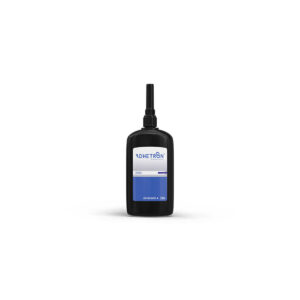
Adhetron Ca-Tron 1241 Multipurpose Cyanoacrylate Adhesive


It is a single-component, cyanoacrylate industrial adhesive. It is used for the fast assembly of plastic, rubber, composite, and metal parts. With fast fixturing, it helps reduce cycle time in mass production.
 Shipping Time 24 Hours : Weekdays 09:00-17:00
- 100% Original: All products with UTM Teknik guarantee


This product is a fast-fixturing, cyanoacrylate-based industrial adhesive designed for multipurpose use. It is positioned for multiple assembly needs across different material groups—especially hard-to-bond plastics, rubbers, composites, and metals. Thanks to its colorless liquid form and low viscosity, it supports controlled dispensing on small parts and fast joining processes. It is preferred in applications that aim to manage cycle time in mass production with short handling/hold times.
CaTron 1241 industrial adhesive: product definition and chemical structure
This industrial adhesive, in the cyanoacrylate class, offers fast curing performance with an ethyl-hybrid base structure. Manufacturer documents emphasize that it can be used in multi-bonding applications and is particularly suitable for “difficult substrates.” Within the compatible substrate range, plastics, rubbers, composites, and metals are highlighted, and materials such as EPDM, neoprene, nitrile rubber, and polycarbonate are explicitly referenced. Origin and manufacturer information can be summarized as follows: developed under Adhetron’s structure with an R&D center in Connecticut, USA, and offered in Turkey via Pulsar Kimya distribution.
Performance characteristics and durability framework
The product is described as a colorless liquid with a viscosity range of 25–40 mPa·s at 25°C, and a gap-filling capability of 0.1 mm is specified. Temperature resistance is stated as -55°C to +82°C; additionally, as temperature increases, initial strength retention is summarized as 81% at 75°C, 80% at 100°C, and 53% at 125°C. In terms of adhesion performance, lap-shear values (ISO 4587) are shared as >15 N/mm² on grit-blasted steel and >6 N/mm² on polycarbonate. For elastomers, tensile strength values (ASTM D412) are provided as >5 N/mm² on nitrile rubber, >2.5 N/mm² on EPDM, and >10 N/mm² on neoprene—supporting evaluation particularly for rubber-part assemblies.
Fast fixturing and application planning
This industrial adhesive clearly demonstrates its “fast handling” behavior through the time-to-reach 0.1 N/mm² strength under 22°C and 50% relative humidity. Values such as <7 seconds on EPDM, <5 seconds on neoprene and nitrile rubber, and <8 seconds on polycarbonate indicate that alignment and press/hold steps must fit into a short window in the process. A distributor technical summary also states a 5–10 second handling time range, which aligns with this fast-assembly approach. Therefore, when planning application, part preparation and fixturing should be designed around short handling times, and the working window should be validated with line trials before mass production.
Storage, shelf life, and standards note
The recommended storage temperature is given as 4°C, with a maximum storage temperature of 25°C, and shelf life is stated as 12 months in unopened packaging. Since the flash point is >85°C, storage and use must be managed in line with workplace safety procedures. The technical document also briefly notes compliance with Mil-A-46050C, Type II Class I; this statement can serve as a reference for projects with specific procurement and quality requirements.
Use cases, substrate compatibility, and key advantages
This industrial adhesive is positioned to address the “one product for many substrates” need in assemblies involving combinations such as plastic–rubber, plastic–metal, and composite–metal. In automotive and transportation, it can be used for fast assembly steps such as fixing EPDM/neoprene/nitrile-based gaskets and elastomer parts to body components. In electrical/electronics and white goods manufacturing, it can help shorten cycle time in small-part assemblies where polycarbonate and various plastic housings are joined to metal carriers. In composite part production and industrial maintenance/repair processes, short handling times provide an advantage in operations requiring fast part turnaround. Its key benefits include fast fixturing, multi-substrate compatibility, controlled application enabled by low viscosity, and process-friendly management through defined storage and shelf-life parameters.
Additional information
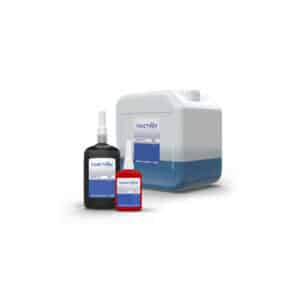
| Miktar | 50 g, 500 g |
|---|