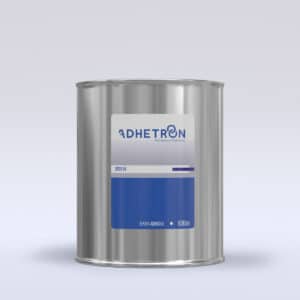
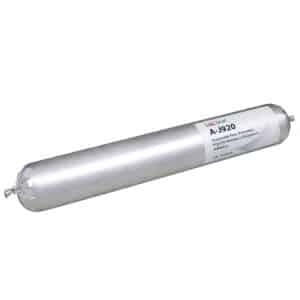
Adhetron EP466FO High-Temperature Epoxy Adhesive 2000°C 275g


A two-component industrial adhesive is used in the assembly of semiconductor, hybrid circuit, fiber optic, and medical components. It offers strong bonding on metal and many plastic surfaces, along with the advantages of sterilization resistance and controlled application.
 Shipping Time 24 Hours : Weekdays 09:00-17:00
- 100% Original: All products with UTM Teknik guarantee


Adhetron EP466FO is a two-component, epoxy-based industrial adhesive developed for applications requiring high temperature resistance, sterilization compatibility, and technical assembly performance. The product is positioned for semiconductor, hybrid circuit, fiber optic, and medical applications, and it provides bonding performance on metal and many plastic surfaces. Its chemical structure is epoxy-based, and after mixing it is applied as a medium-viscosity system with a reddish amber appearance. Regarding origin and manufacturer information, Adhetron’s official corporate materials associate its R&D and production structure with Connecticut, USA, Great Britain, and Japan, while the technical datasheet states that the brand operates under Pulsar Chem. Industry and Trade Co. INC.
EP466FO Technical Structure and Performance Profile
In the official TDS, this industrial adhesive is specified with a mixing ratio of 10:1 by weight, a mixed viscosity of 3000–5000 cPs, and a density of 1.17. In its cured state, it provides Shore D 80–90 hardness, shrinkage below 1%, lap shear strength of 14 N/mm², and a modulus of elasticity of 3500 MPa. The technically verified service temperature range given in the datasheet is -55°C to +240°C; in addition, the glass transition temperature is stated to be above 90°C. This structure makes the product a suitable industrial adhesive for precision assembly processes requiring thermal load resistance, dimensional stability, and structural strength.
EP 466FO Application Areas and Surface Compatibility
According to the official product description, the product has been developed for use in semiconductor production, hybrid electronics, fiber optic components, and medical device assembly. Its good bonding performance on metal and many plastics makes it a meaningful option in technical electronic assembly, optical component fixing, laboratory equipment manufacturing, and medical subcomponents exposed to sterilization. Its stated resistance to EtO, gamma, and autoclave sterilization methods is one of its key advantages, especially in medical and sensitive technical systems. For this reason, the product should be regarded not as a general-purpose adhesive, but rather as an industrial adhesive intended for controlled processes and specialized applications.
Application Method and Process Conditions
Before application, all surfaces must be clean and dry; this step is clearly stated in the official technical documentation. Components A and B should be mixed until a uniform color is obtained, after which curing should be carried out for the appropriate time and temperature. The TDS states a pot life of approximately 3 hours; it also provides thermal curing schedules of 30 minutes at 80°C, 10 minutes at 100°C, 5 minutes at 120°C, and 1 minute at 150°C. The technical datasheet also recommends not mixing more than 20 grams at a time, so dosing and process control are important for successful application.
Standard Information and Technical Evaluation Note
The product page includes the term “pending” for ISO 10993-5 medical-grade requirements; therefore, this should be interpreted as a manufacturer statement rather than confirmed certification. Likewise, although the product page highlights resistance up to 2000°C, the technically verified cured service temperature range in the datasheet is given as -55°C to +240°C. For this reason, engineering evaluation should rely on the TDS data rather than the promotional wording. The product’s key advantages are its bonding capability on metal and many plastics, sterilization resistance, controlled viscosity, and two-component epoxy structure suitable for technical assembly processes.