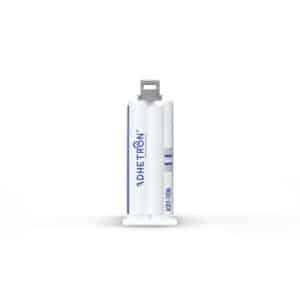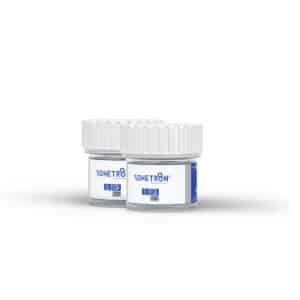
Adhetron EP TEF4463 Epoxy-Based Adhesive 1 kg


An epoxy-based industrial adhesive is used for bonding Teflon, PE, PP, and similar difficult-to-bond plastics to metal surfaces. Thanks to its resistance to chemical exposure and high temperatures, it provides a reliable solution in technical assembly and maintenance applications.
 Shipping Time 24 Hours : Weekdays 09:00-17:00
- 100% Original: All products with UTM Teknik guarantee


Adhetron EP TEF4463 is a two-component, epoxy-based industrial adhesive developed for bonding difficult-to-adhere plastics and selected technical surfaces. The official product description states that it is specifically designed for low surface energy materials such as Teflon, Rulon, PE, and PP, and is also positioned for resistance to high temperatures, chemical exposure, and corrosive environments. Presented in a transparent form, this product is regarded as a technical solution for assembly processes where heat and environmental resistance are critical. While the Adhetron brand is presented as originating from Connecticut, USA, the product is listed in the official technical datasheet under Pulsar Chem. Industry and Trade Co. INC.
Technical Structure and Resistance Properties of EP TEF4463
This industrial adhesive is epoxy-based, transparent in color, and according to the official TDS data has a post-mix viscosity of approximately 4000 cps and a specific gravity of 1.12. Since the mixing ratio is given as 100:2 by weight, precise preparation is important in applications requiring controlled dispensing. In terms of resistance, the product is stated to have a temperature resistance range of -50°C to +260°C, with intermittent resistance up to 800°C for short periods. Mechanical data indicate tensile strength values of 22.0 N/mm² on stainless steel, 27.0 N/mm² on aluminum, and 3.0 N/mm² on Teflon and Rulon. On the electrical side, the dielectric strength is given as above 15 kV/mm, and some values are stated according to NFC 26255 and NFC 26230 methods.
Application Areas and Surface Compatibility of TEF4463
EP TEF4463 is an industrial adhesive that stands out especially in technical assemblies involving low surface energy plastics. In addition to Teflon, Rulon, PE, and PP surfaces, the official strength data for metal substrates such as stainless steel and aluminum show that the product can also be used in plastic-to-metal combinations. This makes it suitable for plastic equipment parts, fluid-contact components, technical insulation parts, wear elements, and assembly components made of specialty engineering plastics where chemical resistance, heat resistance, and stability against corrosive environments are expected. In sectoral terms, it may stand out in areas such as chemical process equipment, machine maintenance applications, technical plastic part assembly, and the joining of special components exposed to heat. The official product descriptions directly position its purpose as the reliable bonding of difficult-to-adhere surfaces.
Application Method and Process Control
The official technical datasheet clearly states that surfaces must be completely free of dust, oil, and other contaminants before application. Components A and B should be weighed according to the specified mixing ratio, mixed homogeneously for at least two minutes, and the prepared mixture must be applied within its pot life. The curing data provide a basic cure profile of 2 hours at 100°C, while a post-cure of 16 hours at 150°C is recommended for maximum chemical and thermal resistance. This approach shows that the product requires process discipline not only for initial adhesion but also for long-term performance under service conditions.
Key Advantages and Technical Evaluation
The most important advantage of this product is that it has been developed for PTFE-derived and polyolefin-based surfaces, which are often challenging for standard epoxy systems. Thanks to its high temperature resistance, chemical resistance, and compatibility with corrosive environments, it offers a functional industrial adhesive solution for maintenance, assembly, and special engineering applications. Its transparent form and medium-viscosity profile provide ease of use in technical bonding processes requiring controlled application. The official documents also state a shelf life of 12 months at room temperature in unopened original packaging; if the resin crystallizes during storage, it can be restored by heating at 40°C for one hour. These data show that the product is positioned especially for industrial applications requiring process reliability and long-term durability.