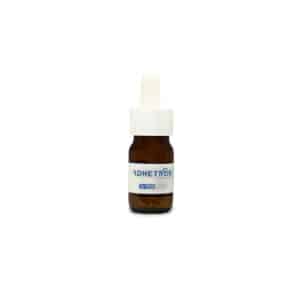
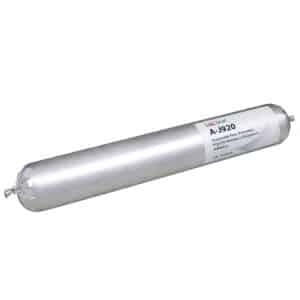
Adhetron Catron Primer Aqua Water-Based Surface Preparation Primer


A water-based surface preparation primer is used to improve adhesion on low surface energy plastics and similar difficult-to-bond materials. It is especially used to enhance surface compatibility before industrial adhesive applications, making the assembly process more reliable and efficient.
 Shipping Time 24 Hours : Weekdays 09:00-17:00
- 100% Original: All products with UTM Teknik guarantee


Adhetron Catron Primer Aqua is a water-based surface preparation primer developed to improve adhesion performance on low surface energy materials. The product is positioned specifically as an intermediate process chemical applied prior to cyanoacrylate-based industrial adhesive systems. Official technical documents state that it improves bonding on difficult-to-adhere surfaces such as thermoplastics, silicones, polymers, polyolefins, polypropylene, and polyethylene. For this reason, the product should be evaluated not as a direct adhesive, but as a process support material that enhances bonding quality.
Catron Primer Aqua Product Description and Technical Structure
The technical structure of Catron Primer Aqua is based on a water-based formulation and has been developed to promote adhesion on low surface energy, apolar surfaces. According to the official TDS data, the product is in liquid form, light yellow in color, and has a density of approximately 1.03. No numerical flammability value is provided for the flash point in the technical document; only the expression “non” is stated. Therefore, when interpreting the product’s safety performance, the SDS should be taken as the main reference. Manufacturer information in the official technical data sheet indicates that the Adhetron brand is offered under Pulsar Chem. Industry and Trade Co. Inc.; however, the country of origin is not clearly and explicitly specified in the publicly available technical documents reviewed.
Catron Primer Aqua Performance Features and Application Areas
The product’s key performance advantage is that it facilitates the adhesion of cyanoacrylate adhesives on low surface energy materials and accelerates the process. According to the technical documentation, in addition to supporting bonding, it helps reduce handling and polymerization time, which enables a more controlled process in mass production and repetitive assembly lines. Since detailed numerical data on heat resistance, chemical resistance, or pressure resistance are not shared in the publicly available TDS, it would not be appropriate to provide additional technical values under these headings. Compatible surfaces prominently include polyolefins, PP, PE, silicones, and similar difficult-to-bond plastic and polymer groups; therefore, the product is particularly functional in processes involving plastic assembly.
Industrial Use Scenarios
This surface preparation primer can be used in automotive sub-industry applications, electronic component assembly, white goods, medical consumables assembly, lighting equipment, and general industrial production lines where plastic- and elastomer-based assemblies are involved. It is especially suitable for processes requiring pre-treatment on surfaces such as PP, PE, and silicone, which are challenging in standard cyanoacrylate applications. It also provides process stability in furniture components, signage applications, small plastic part bonding, and precision assembly work carried out for technical maintenance purposes. In this respect, the product is an auxiliary process chemical that builds a bridge between surface preparation and adhesive performance.
Application Method and Process Advantages
The product is ready to use and is applied directly to a clean, dry surface. Before application, it is recommended that the surface be cleaned with a suitable cleaner; then, the primer should be allowed to evaporate completely, after which the cyanoacrylate adhesive is applied. This approach helps standardize surface preparation, resulting in more stable adhesion, lower process variation, and shorter cycle times. Since certification or standard declarations are not prominently stated in the official public documents, the product evaluation should primarily be based on surface compatibility and process efficiency.