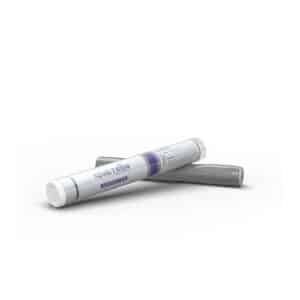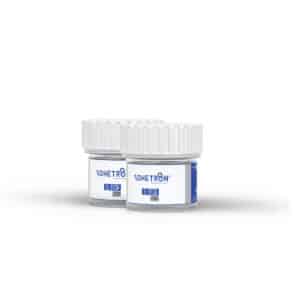
Adhetron Addy-Sil 654 Thermally Conductive Silicone Adhesive 50 g

It is a silicone-based, thermally conductive adhesive. It is used in gap-filling applications that support heat transfer in battery packs, power electronics, and electronic modules, and stands out for its elastic structure and process compatibility.
 Shipping Time 24 Hours : Weekdays 09:00-17:00
- 100% Original: All products with UTM Teknik guarantee


Adhetron Addy-Sil 654 is defined in the official technical documents as a two-component, thermally conductive, silicone-based gap filler material. The product is designed to improve thermal contact by filling the gaps between components in electronic assemblies where heat transfer is critical. Its ability to cure at room temperature or with heat makes it easier to adapt to different production processes. Thanks to its silicone elastomer structure, it offers a solution that helps maintain a balance of flexibility and functionality in systems exposed to thermal cycling.
Technical Structure and Basic Performance of Addy-Sil 654
The chemical structure of this product is silicone-based and it has been developed in a two-component form. According to the official TDS, the series offers thermal conductivity levels ranging from 2.5 to 7 W/mK; the mixing ratio is 100:100 by weight and by volume, the specific gravity is 3.0, and the color is pink. In its cured state, it forms a pink silicone elastomer appearance; this structure provides an advantage over rigid epoxies in systems where impact resistance and thermal movement are more critical. Adhetron is a brand of Pulsar Chem. Industry and Trade Co. INC.; the brand’s R&D and manufacturing infrastructure is associated with Connecticut, USA, Great Britain, and Japan, while its distribution network is operated through Türkiye.
Thermal Resistance and Curing Behavior
The product’s most notable performance aspect is its high temperature resistance and durability under thermal cycling. According to the official data, its post-cure operating temperature range is from -65°C to +200°C, its pot life at 25°C is 60 minutes, and its room-temperature curing time is 24 hours. Since the Shore 00 hardness value is given as 50–60, the product exhibits an elastomeric character intended more for thermal gap filling and compliance between surfaces than for use as a rigid structural material. The currently available official technical documents do not highlight any specific certification or standard declaration.
Application Method and System Compatibility
The Addy-Sil 654 series is supplied in 1:1 dual-cartridge packaging, and the two components must be mixed in the correct ratio during application. Its ability to cure at room temperature provides flexibility in field applications, while the heat-curing option offers an advantage in production lines in terms of cycle time management. Due to the general nature of silicone technology, it is suitable for use in electronic systems containing metal, plastic, and glass components together; however, the product’s main function is not structural bonding, but rather creating a thermal interface and filling gaps. For this reason, it is better positioned in systems where thermal contact must be improved between heat spreaders, housings, and electronic modules.
Applications and Key Advantages of Addy-Sil 654
Official product pages particularly recommend this series for battery packs, electric vehicle systems, and power electronics applications. In this context, the product can be used in energy storage modules, thermal management points around EV batteries, power electronics boards, and internal enclosure gaps in electronics where heat control is required. Its main advantages include a structure focused on high thermal conductivity, resistance to thermal cycling, the ability to cure at room temperature or with heat, and an elastomeric structure that can accommodate surface tolerances. In short, rather than being a conventional adhesive, this product stands out as a technical thermal filler solution that supports heat transfer in electronics and e-mobility-focused systems.
Related products