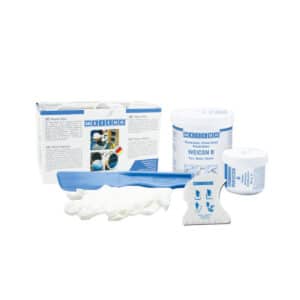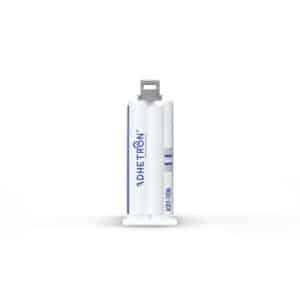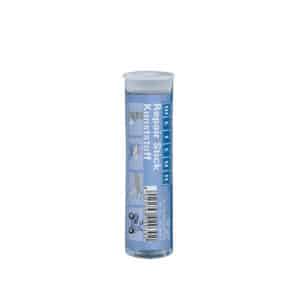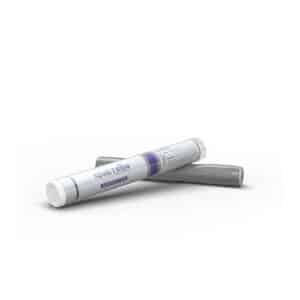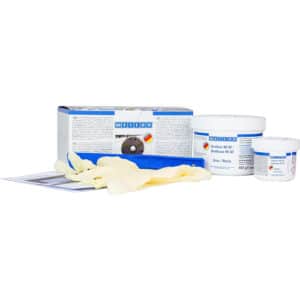
WEICON TI titanium-filled epoxy system, 2 kg


It is a titanium-filled, two-component, epoxy-based industrial adhesive/repair paste. It is suitable for filling, repair, and coating applications on pumps, valves, wear plates, bearing seats, and shafts. With high pressure and chemical resistance, it forms a durable repair layer.
 Shipping Time 24 Hours : Weekdays 09:00-17:00
- 100% Original: All products with UTM Teknik guarantee


WEICON TI is a titanium-filled, two-component epoxy resin system used especially for repair jobs where high pressure resistance and chemical resistance are required. Its paste-like consistency helps reduce sagging on vertical surfaces, supports controlled application, and forms a hard, metal-like repair layer after curing. This product is not only intended for filling and repair; with proper surface preparation it can also function as an “industrial adhesive,” providing localized structural restoration on metal parts. The manufacturer is WEICON GmbH & Co. KG (Germany), and the product is positioned within WEICON’s epoxy resin systems range.
Chemical structure and process characteristics of the TI epoxy system
The TI system is epoxy-based and contains titanium as the filler; it is grey and has a paste-like consistency. The mixing ratio is defined as 100:33 by weight and 100:35 by volume, and sticking to these ratios is critical for both mechanical values and curing behavior. At 20 °C, the working time for a 500 g mix is 120 minutes; since reaction heat increases in large masses, preparing smaller batches is a safer approach. The recommended maximum layer thickness in a single application is 10 mm, and consumption at 1 mm thickness is 1.6 kg/m². These parameters make the product a practical system for both filling/repair and “industrial adhesive” applications.
Balance of strength, temperature resistance, and chemical resistance
Once curing is complete, tensile strength reaches 53 MPa and Shore D hardness is 83±3, providing a strong basis for applications aiming for a rigid, tough structure in the repaired area. Adhesion strength depends on surface preparation, and lap shear strength on blasted steel is reported as 5 MPa; therefore, proper surface preparation is the main factor determining “industrial adhesive” performance. Temperature resistance is specified from -35 °C to +200 °C, with short-term resistance stated up to +260 °C; if high temperature performance is targeted, post-cure tempering steps are recommended. In the chemical resistance table, many oils, fuels, and certain chemicals are classified as “resistant” or “limited period”; the decision to use it in such environments should consider contact time and concentration. This balance supports a long-lasting repair approach in fluid-contact equipment such as pumps and valves.
Application method, surface preparation, and sector-based uses
The key requirement for a successful application is that the surface is completely free from oil, grease, rust, oxides, and paint residues; if possible, cleanliness close to SA 2½ is targeted by blasting and a roughness of approximately 75–100 µm is recommended. Resin and hardener should be mixed for at least 4 minutes without entrapping air, and in mechanical mixing a low speed not exceeding 500 rpm is preferred. For maximum adhesion, it is recommended to work a thin first coat thoroughly into the surface with crosswise motions, then continue building up to the required thickness without air bubbles; for large voids, mechanical reinforcement elements such as fiberglass or expanded metal can be used. In machine and plant maintenance, repair and reshaping applications are common for pump housings and internal surface linings, slide bearing surfaces, valves and wear plates, bearing seats, shafts, and impellers. In these applications, the TI system can provide fast field recovery with the right process, acting both as a filling/repair resin and with an “industrial adhesive” approach.
Standards, storage, and operational advantages
ISSA and IMPA codes are defined for the product, and compatibility with MIL-C-24176 is also stated; this helps traceability especially in maintenance supply chains and marine/industrial cataloging. Minimum shelf life at room temperature is specified as 36 months, while opened containers are recommended to be used within 6 months under suitable conditions. The application temperature range of +15 °C to +40 °C supports use in many field environments without additional climate control. Since tempering helps sustain temperature resistance, more stable results can be targeted in high-temperature areas with a planned curing/heating procedure. Overall advantages include controlled application thanks to the paste consistency, a focus on high temperature resistance, and combining “industrial adhesive” and repair functions in a single system across many types of industrial equipment.