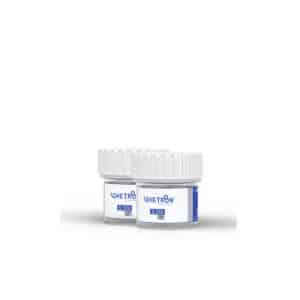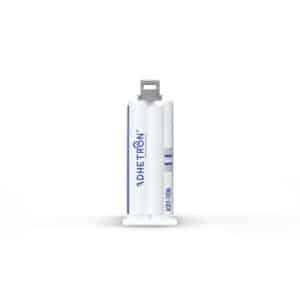
Weicon GL high wear-resistant epoxy resin 1 kg


It is a two-component epoxy resin–based material used for wear-resistant protective coating and surface repair. It is applied on pump housings, pipe interiors, bunkers/hoppers, and other metal surfaces exposed to abrasion; it forms a hard, durable layer that helps extend maintenance intervals.
 Shipping Time 24 Hours : Weekdays 09:00-17:00
- 100% Original: All products with UTM Teknik guarantee


WEICON GL high wear-resistant epoxy resin (1 kg) is a two-component epoxy resin system used for protective coating and repair of metal surfaces exposed to intense friction and abrasive particle wear. Thanks to its flowable consistency, it penetrates surface irregularities well and achieves strong adhesion with proper surface preparation. Its mineral-filled structure is designed to support abrasion resistance, especially under heavy-duty conditions. The product is part of the industrial maintenance and repair solutions portfolio of Germany-based WEICON GmbH & Co. KG.
Technical structure and working principle of the WEICON GL epoxy system
This product is based on an epoxy resin and features a mineral-reinforced formulation. After curing, it forms a hard, wear-resistant layer, making it a practical option for a “surface armoring” approach. The two components must be mixed in a controlled manner at a ratio of 100:20 by weight and 100:26 by volume. At +25 °C, the mixture has a viscosity of approximately 13,000 mPa·s and a density of about 1.3 g/cm³. The typical cured color is green, and this visible layer can be an advantage in applications where wear progression is monitored visually.
Performance values and resistance profile of the GL epoxy resin
In terms of abrasion resistance, the typical mass/volume loss value is given as 0.7 g / 0.6 cm³ in the Taber abrasion test (H18, 1 kg, 1000 cycles), indicating potential to extend coating service life on high-friction surfaces. Mechanically, the tensile strength is approximately 59 MPa, compressive strength about 99 MPa, and flexural strength around 122 MPa. Hardness is specified as Shore D 81±3, which is beneficial for areas requiring form stability under impact wear and surface loading. For adhesion performance, tensile bond strength is reported at approximately 19 MPa; lap shear strength on steel (blast-cleaned) is also reported with typical values around 12 MPa. The service temperature range is specified as -35 °C to +180 °C, while heat deflection temperature (HDT) is around +125 °C.
Application and curing: working time window and layer management
The pot life at 20 °C (for a 500 g mix) is approximately 30 minutes, so the batch size should be planned according to the workable time. The typical interval for recoating is about 3.5 hours; handling strength is reached in roughly 6 hours, and functional end strength is targeted at around 8 hours. In practice, full hardness is achieved at 20 °C within a maximum of 24 hours; lower temperatures slow the reaction, and at around 5 °C the reaction can nearly come to a standstill. The recommended maximum layer thickness in one step is 10 mm. At a 1.0 mm layer thickness, typical coverage is estimated at about 1.3 kg/m². Avoiding air entrapment during application is critical, as bubbles can lead to premature weakness under abrasive load.
Surface preparation and correct application technique
For high adhesion and long service life, the surface must be completely free of oil, grease, rust, paint, and oxides. In heavy-duty applications, mechanical preparation by grinding or preferably grit blasting is recommended; blasting cleanliness close to “SA 2½” and a surface profile of approximately 75–100 µm are targeted. The mixture should be stirred for at least several minutes until homogeneous and bubble-free; for mechanical mixing, low speed (around 500 rpm or below) is preferred. Applying the first layer by brushing it in crosswise helps the resin penetrate cracks and roughness; then a brush or foam roller can be used to build the desired thickness. For process reliability, an application temperature range of +15 °C to +40 °C and relative humidity below 85% are considered key limits.
Sector-specific applications and compatible surfaces
The GL-type epoxy system is particularly used for coating the inner surfaces of pump housings, sliding bearing areas, channels, bunker/hopper surfaces, and pipe interiors where wear is severe. It is also preferred in maintenance and repair scenarios such as surface rebuilding of cast parts, valves, and fan blades, where the goal is to restore functionality instead of replacing parts. Mechanical and plant engineering, equipment manufacturing, and general industrial maintenance are its natural application areas, especially at transfer points and lines carrying solid particles where friction is high and a protective layer approach is required. With proper preparation, strong performance is targeted on metals such as blast-cleaned steel, stainless steel, aluminum, and galvanized steel. In terms of chemical resistance, the product is positioned as a wear-protection coating that can resist selected chemicals; however, assessing site chemistry and temperature conditions is the right approach for long-term durability.