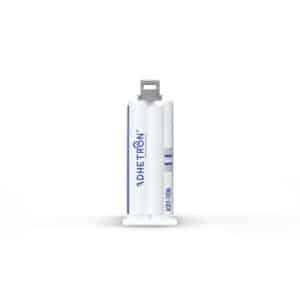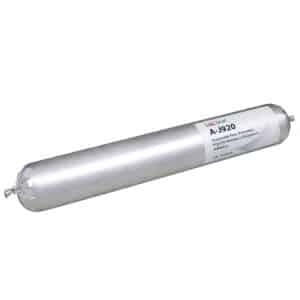
Adhetron Acrytron Solar Odorless Acrylic-Based Adhesive 50 ml


It is an acrylic-based, two-component, odorless industrial adhesive. It is used for durable bonding in metal structures and bracket connections during solar panel installation. Its cartridge system provides fast, controlled application advantages.
 Shipping Time 24 Hours : Weekdays 09:00-17:00
- 100% Original: All products with UTM Teknik guarantee


Adhetron Acry-Tron Solar Odorless Acrylic-Based Adhesive 50 ml is a structural product developed to securely fix fastening elements onto metal constructions in solar panel installation processes. Thanks to its two-component system, it aims to create a durable bond line between metal and different substrates. Its flexible bond-line character is designed to help accommodate thermal expansion differences between dissimilar materials. In this respect, as an industrial adhesive used in production and on-site installation, it focuses on ease of application and process continuity.
Definition of the Acry-Tron Solar Structural Industrial Adhesive
This product is positioned as a structural industrial adhesive with an acrylic base and an odorless formulation. Being designed specifically for bonding U-brackets used during solar panel assembly to steel constructions clarifies its target application. Its approach to high-temperature resistance and flexible structure is intended to support joint reliability at mounting points exposed to vibration and environmental variables. The cartridge system enables controlled dispensing and repeatable field application.
Technical Performance and Strength Parameters
In the two-component system, the mix ratio is specified as 1:1 and viscosity is given in the 7000–9000 cps range; this helps limit run-off during application while supporting a fuller bond line on the surface. Since the working time is stated as 5 minutes, it offers a planned application advantage for jobs requiring quick positioning during installation. Temperature resistance is expressed as -40 °C to +200 °C, which is a technical evaluation criterion for systems operating outdoors. In terms of mechanical performance, lap shear strength is reported as 28.9 MPa on steel/steel, 20 MPa on aluminum/aluminum, and 23.5 MPa on stainless steel/stainless steel. This technical framework makes it a preferred industrial adhesive for metal-focused assemblies.
Curing and Process Behavior
Fixture time is defined in the 9–13 minute range, providing a process window that helps the part stay in place in a short time. Functional strength is stated to be achieved in about 2 hours, while full cure is specified as 24 hours; therefore, loading and commissioning plans should be aligned with curing times. Post-cure hardness is given as Shore D 55, and the tough/semi-flexible bond-line approach aims to contribute to stress management across different substrates. A storage range of 12–23 °C is recommended and a maximum shelf life of 9 months is stated for components A & B, making batch tracking important for inventory control.
Application Method, Compatible Substrates, and Surface Preparation
Before application, cleaning the surfaces from oil, dirt, oxides, and weak coating residues is a critical step for industrial adhesive performance. The product can be applied with a static mixing tip or by the bead-on-bead method, allowing adaptation to field equipment conditions. Recommended substrates include steel, aluminum, stainless steel, coated metals, copper, and brass, as well as ABS, rigid PVC, acrylic, glass, wood, concrete/stone, and composites such as FRP/GRP. After application, avoiding stress on the joint until fixture is achieved, and not applying final loads before full cure, improves process reliability.
Sector-Based Uses and Key Advantages
The product stands out in renewable energy applications for securing U-bracket-like fastening elements in solar panel frame and construction assemblies. In metalworking and construction fabrication, it offers a structural bonding approach where reducing mechanical operations such as drilling and riveting is desired. In electrical and electronics field installations, it can be evaluated for cabinet, chassis, and carrier-part assembly, and for dissimilar material combinations in lightweight composite systems. The odorless formulation contributes to user comfort in enclosed-area installation, while the flexible bond line helps manage thermal expansion differences more controllably. Since the official technical document does not state a specific certification/standard claim, suitability for standards-driven projects should be clarified through internal verification and process testing.